+20 155 969 5326
 info@as-home-group.com
Egypt's Real Estate Market in 2025: What Every Property Owner Needs to Know
Egypt property prices rose 13–30% in 2025 and rental yields hit 6.7% nationwide. A data-driven guide for Egyptian property owners on where the market stands — and what to do next.

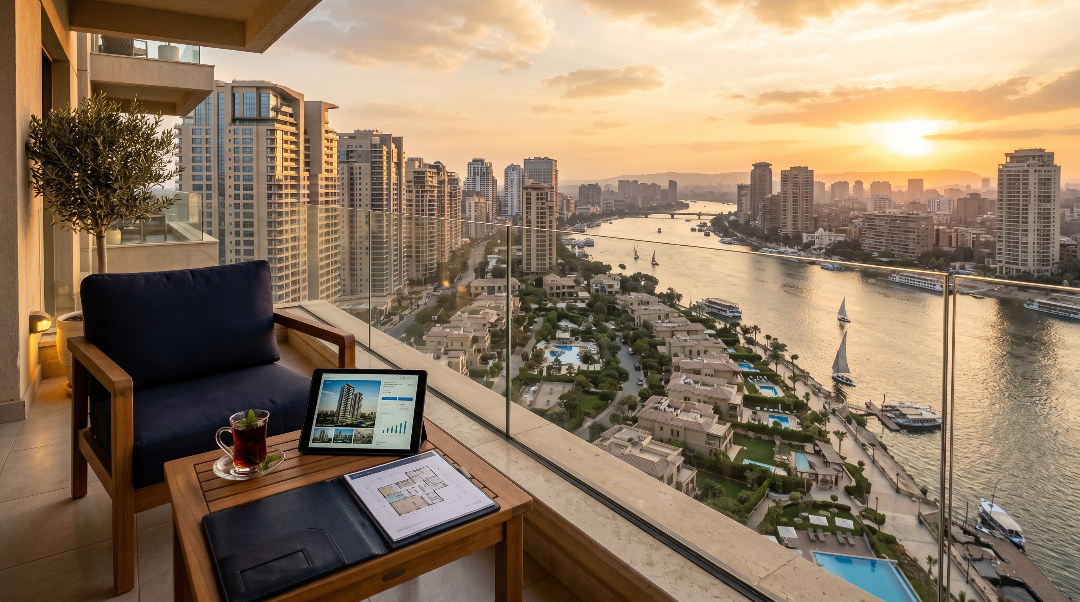
Egyptian property prices rose 13 to 30% in 2025 and rental yields averaged 6.7% nationwide, while interest rates fell 525 basis points. Developer sales reached EGP 290bn in Q1 2025 alone. For an owner, that combination means the paper value of a unit has moved but the income it produces has moved less, so the practical question is no longer whether to hold but whether the unit is working. This guide covers where prices moved and why, yields by city and property type, the risks that are real, and what to do with a unit you already own.
Prices rose 13–30% in 2025. Rental yields averaged 6.7% nationwide. Interest rates fell 525 basis points. Here is what all of this means for you — and what to do with it.
|
13–30%
Price growth 2025
|
6.7%
Avg rental yield nationwide
|
EGP 290bn
Developer sales Q1 2025
|
$20bn
Market value by end 2025
|
In this guide
01 The state of the market in 2025
02 Where prices moved and why
03 Rental yields by city and property type
04 The investment hotspots in 2025
05 What is driving the market forward
06 The risks that are real
07 What this means for existing owners
08 The three actions to take now
Egypt's real estate market has been one of the most active and data-rich stories in the region over the past three years. Whether you own a single apartment in New Cairo, a chalet on the North Coast, a villa in a coastal compound, or a hotel in Hurghada, the decisions you make about that asset in the next 12–24 months will be shaped by conditions that are genuinely different from anything the market has seen before.
Interest rates fell by 525 basis points across 2025. Property prices nationwide rose between 13% and 30% year-on-year depending on area. Developer sales hit EGP 290 billion in Q1 2025 alone — a 23% increase on the prior year. Rental yields improved to an average 6.7% nationwide. This is a market with real momentum behind it, and understanding that momentum is the starting point for every property owner's decision-making.
The State of the Market in 2025
The clearest way to characterise Egypt's 2025 property market is this: it moved from a period of crisis-driven volatility into a phase of demand-driven momentum. The currency floatation of 2024, which caused short-term disruption, ultimately repriced Egyptian real estate to levels that look attractive in USD terms — drawing in Gulf buyers, Egyptian diaspora capital, and institutional investors who had been on the sidelines.
95% of transactions remain domestic. Egypt's property market is primarily driven by its own citizens — a population growing by 2.5 million annually, with approximately one million marriages per year creating housing demand that developers cannot fully satisfy. This structural demand floor means the market does not rely on foreign capital to sustain momentum, even as international interest increases.
The Egyptian government's recognition of this dynamic has translated into a sustained policy of urban expansion — new cities, new infrastructure, and tax environments that remain unusually favourable for real estate: no capital gains tax, no wealth tax, and low transaction costs relative to comparable markets.
JLL MENA assessment — Q3 2025
"Cairo's freehold residential market is expected to experience a notable pickup as declining interest rates encourage investors to shift from bank deposits to real estate assets. Further rate cuts are anticipated to enhance market cashflow, facilitate land acquisitions, and spur new project launches, positioning the residential sector for renewed growth momentum."
Where Prices Moved and Why
The national real estate price index rose by 13.25% year-on-year in October 2025, per Aqarmap data. This headline figure, however, masks significant variation across segments and geographies. In New Cairo and the New Administrative Capital, prices rose by 20–30% through Q2 2025. In some mid-tier suburban areas, growth was more moderate at 7–12%.
Egypt’s residential property market has shown a clear cycle of acceleration followed by moderation over the past few years. After relatively modest growth in 2021, prices surged significantly in 2022, reaching a peak in 2023 with the strongest year-on-year increase in the period observed. This sharp rise reflects heightened demand, currency pressures, and a shift toward real estate as a hedge against inflation. However, momentum began to ease in 2024, with growth rates declining from their peak levels, indicating a gradual market stabilization. By October 2025, price growth remains positive but more subdued, suggesting that while the market continues to expand, it is transitioning into a more sustainable phase after the rapid gains of the previous two years.
The primary driver of price growth has been inflation — construction costs rose sharply following the currency devaluation of 2024, and developers passed these costs into unit prices. However, the underlying demand more than absorbed these increases, resulting in real (inflation-adjusted) price growth in most primary markets.
The New Administrative Capital effect
Egypt's New Administrative Capital — under ongoing development east of Cairo — has become the country's single highest-profile real estate investment story. Early-phase investors have seen significant paper gains as the city moves from construction to occupancy. For owners in adjacent New Cairo markets, the capital effect has lifted surrounding land and property values as infrastructure extends outward.
Coastal markets: the tourism premium
Hurghada, Sahl Hasheesh, El Gouna, and coastal North Coast destinations have seen values supported both by property price inflation and by tourism-driven rental demand. The dual driver — capital appreciation plus income yield — makes coastal property Egypt's most compelling investment thesis for owners seeking both return streams simultaneously.
Rental Yields by City and Property Type
Rental yields improved nationally in 2025 as rents rose sharply in high-demand urban and coastal areas. The JLL MENA Q4 2025 report confirmed a national average gross yield of 6.7%, with higher returns in fully serviced and well-developed areas.
| Market | Gross rental yield | Key driver | Trend |
|---|---|---|---|
| Cairo — central (Zamalek, Maadi, Heliopolis) | 6.70% avg, up to 12.73% | Expat and executive long-term demand | ↑ Rising |
| New Cairo / Fifth Settlement | 6–9% | Professional families, proximity to international schools | ↑ Rising |
| 6th of October / Sheikh Zayed | 6–8% | Strong residential demand, 17.6% rent growth in Q3 2025 | ↑ Rising fast |
| Alexandria | ~5.09% | Domestic seasonal and long-term residential | → Stable |
| Hurghada (long-term rental) | 7–8% | Expat community + coastal lifestyle demand | ↑ Rising |
| Hurghada (short-term / vacation) | 7–10%+ | Year-round international tourism | ↑ Rising |
| North Coast (seasonal) | Strong summer yield | Egyptian domestic summer travel | ↑ Rising fast |
Context on Cairo yields
New Cairo apartments saw rental growth of 16.9% in Q3 2025 alone — significantly outpacing even the strong price growth on purchase values. For owners in these areas, rental income has become a more compelling near-term return driver than capital appreciation. Choosing to rent rather than sell is increasingly the higher-return decision in many Cairo submarkets.
The Investment Hotspots in 2025
Not all Egyptian property markets are equal, and not all segments are performing at the same pace. These are the five areas drawing the most consistent attention from investors and buyers in 2025:
|
New Administrative Capital Capital appreciation play Egypt's flagship urban development. Early-phase investors have seen strong paper gains. Rental yields are building as occupancy grows. High risk/reward profile. |
New Cairo / 5th Settlement Stable yield + capital growth Egypt's most liquid secondary market. Strong expat and upper-middle-class demand. 16.9% rental growth in Q3 2025. The most active resale market in Greater Cairo. |
Hurghada & Red Sea Coast Dual-income: capital + rental Freehold ownership, 7–10% STR yields, year-round tourism. The strongest combination of income return and lifestyle value in Egypt's market. |
|
North Coast (Sahel) Summer premium market Summer occupancy 70–85% for beachfront units. Premium nightly rates. Rapidly professionalising as developers launch year-round-capable communities. |
6th of October / Sheikh Zayed Rental growth outperformer 17.6% rental growth in Q3 2025 — the fastest in Greater Cairo. Strong demand from professionals priced out of central Cairo. Near-term income play. |
What Is Driving the Market Forward
Population growth and marriage-driven demand
Egypt's population grows by approximately 2.5 million annually, and about one million marriages take place each year. Each marriage creates a housing need. This structural demographic demand is not cyclical — it is a multi-decade floor under residential property values that does not depend on investor sentiment or economic cycles to sustain it.
Interest rate reductions
The Central Bank of Egypt cut rates by a cumulative 525 basis points throughout 2025 — from 27.25% to 22% — and further cuts are expected. Lower rates reduce the opportunity cost of holding property versus deposits, encourage developers to finance new projects, and make mortgage products more accessible for domestic buyers. Each rate cut expands the pool of buyers who can afford a purchase.
Tourism expansion
Egypt's tourism sector set a historic milestone in 2025, welcoming nearly 19 million visitors. The government target is 30 million by 2030. This growth directly benefits property owners in coastal and heritage tourism cities — more tourists mean more demand for short-term rentals, hotel stays, and ultimately property purchases by visitors who fall in love with a destination. The opening of the Grand Egyptian Museum has already accelerated Cairo-area real estate interest.
Currency dynamics for foreign buyers
The Egyptian Pound's significant devaluation against the USD and EUR since 2022 has made Egyptian property attractively priced for Gulf and European buyers in hard-currency terms. A property worth $80,000 USD in 2022 might now be purchased at the same USD price despite EGP inflation — representing a genuine value opportunity for foreign capital. This is drawing in the Gulf investor base at a historically high rate.
The Risks That Are Real
Any honest assessment of Egypt's real estate market must include the material risks. Positioning your asset well means acknowledging what can go wrong, not just what is going right.
Currency risk
For owners measuring their returns in hard currency (USD, EUR, GCC), Egyptian Pound volatility remains a genuine risk. EGP depreciation erodes USD-equivalent returns even when nominal EGP values are rising. The best hedge is a property generating income in USD or EUR — which coastal and tourist-facing properties increasingly do.
Off-plan developer risk
Off-plan purchase is the dominant transaction type in Egypt's primary market, and it carries real risk if a developer delays, restructures, or faces financial difficulty. The 2026 legislative package expected from Parliament — governing off-plan sales and buyer protection funds — should improve this, but due diligence on developer track records remains essential today.
Supply pressure in oversaturated areas
Some satellite city areas — Obour City, El Shorouk, parts of October — are seeing relative price stability or softness because supply is growing faster than demand absorption. In these markets, the short-term rental strategy may underperform relative to coastal or premium urban locations.
What This Means for Existing Property Owners
If you already own property in Egypt — an apartment in Cairo, a chalet on the North Coast, a unit in a coastal development — the 2025 market data points toward a specific set of conclusions.
Selling into this market is tempting but requires timing clarity. Prices have risen sharply in nominal EGP terms, and any sale monetises those gains. But reinvesting the proceeds carries its own challenges — and for owners with hard-currency-earning rental potential, the ongoing income stream may outperform a sale and redeployment strategy over a 3–5 year horizon.
Activating an idle asset is the clearest near-term opportunity. The Egyptian rental market — both short-term vacation and long-term residential — is delivering yields of 6–10%+ in most major markets. An apartment that has sat empty or on a below-inflation long-term lease at fixed EGP rates is generating a real loss versus what the same asset could earn in an active rental market.
Platform visibility matters now more than it ever has. Egypt has nearly 19 million annual tourists, a large and growing Gulf buyer audience, and a domestic travel market that digitally searches for accommodation. A property owner not visible on digital platforms is invisible to this demand.
Three Actions to Take Now
Based on where the market sits in 2025, here are the three most impactful moves for existing property owners regardless of city or property type:
|
Audit your current return Calculate what your property actually earns today — occupancy, income, yield on current value. Then compare it to market benchmarks for your area. Most owners are surprised to find they are earning well below what active management could deliver. |
Get your property on digital platforms Visibility on dedicated property platforms — particularly those serving the Gulf, Egyptian domestic, and European audiences — is no longer optional. As-Home, Airbnb, and Booking.com each reach different segments. Being listed on all three costs nothing meaningful and expands your addressable audience by orders of magnitude. |
Reprice for today's market Egypt's rental market moved faster than most owners' pricing did. If your long-term lease was set in 2022 or 2023 EGP, you are likely charging a fraction of current market rates. Annual rent reviews are standard practice in a market with 13–30% annual property price growth — enforce them. |
Your Asset. Egypt's Market. Our Platform.
Whether you want to sell, rent short-term, or list for long stays — As-Home connects your property with buyers and guests across Egypt, the Gulf, and Europe.
More from Market insights.
Vacation Rental Prices in Egypt 2026: The As-Home Price Index
What do vacation rentals in Egypt actually cost in 2026? Real per-night prices for Hurghada and the North Coast, built from live As-Home listings.
The As-home teamJun 23, 2026
How to List Your Hotel Online in Egypt and Receive More Booking Enquiries in 2026
What a useful hotel listing needs, why room types, photos and policies matter more than the description, and exactly how As-home's eight-step hotel onboarding works today, including what happens to a listing with no priced rooms. Written for independent hotels, boutique hotels and small resorts.
The As-home teamSep 8, 2026
Buying Property in Hurghada in 2026: Apartments for Sale and Buyer Checklist
182 properties for sale in Hurghada on As-home on 8 September 2026, 163 of them apartments with a median asking price near 3.9 million EGP. Ready, resale and off-plan, cash versus installments, and the title, service-charge, beach and resale checks to make before a deposit.
The As-home teamSep 8, 2026